Binding a Quilt
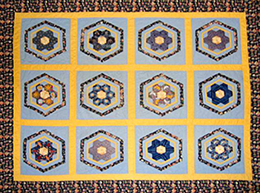
Finally you have reached the binding stage. Hooray! Your quilt is almost finished and hopefully looking as beautiful as you imagined!
There are two different ways to bind the edge of your quilt:
- Firstly, you can use an overlap of material either from the quilt top or the backing. Fold the excess over the raw edge, turn under the edge of the binding and stitch it down. This process is not as strong as using separate bindings, so if the quilt is for everyday use please consider doing it a different way as the edge of your quilt receives the most wear and tear. This way of binding is very simple and easy however might not give your quilt the same definition and outline that looks fantastic on so many quilts.
- The second way is to introduce a last strip of material/binding that ties in the color scheme of the quilt. To do this, cut the binding about 1/2 inch wider than the desired width. Fold the binding in half with the back of the material together and iron. Fold the edges under again and press. Line up the fabric edges with the top raw edge of the quilt with the pressed and folded edges facing the center of the quilt. Then sew the raw bound edges to the raw quilt edge about 1/4 inch away from the edge. Then fold the bind over the back side of the quilt and bind stitch to the back covering all the raw edges.
Corners can either be mitred, where you can cut the binding at a 45 degree angle and then sew together, or you can gather the excess fabric and sew around the corner giving a smooth curve rather than a pointed edge.
Congratulations! Your quilt is now finished and ready to enjoy!

| Previous: Machine Quilting | Next: Quilting Books |